
Technical resources such as firewalls and data encryption are only as useful as the hands that wield them. That is why when it comes to cloud security, a key strategy like the Zero Trust approach is equally important in protecting sensitive data. The concept of Zero Trust is exactly what it sounds in which its basic principle is to never trust and always verify any user (or otherwise) within or outside of the secured network. This concept is reenforced by the authorization processes of people and devices along with constant inspection of the security framework. Strict privileges, user access, and authentication are required for all applications, devices, and users, making the Zero Trust approach the most secure Cloud Security strategy.
The Zero Trust philosophy targets areas of weakness that start at its core and then builds a security infrastructure from the inside-out instead of vice versa. This is achieved through micro-segmentation in which assets are reorganized and placed in zones where they are further isolated by standard security measures, therefore creating multiple lines of defense against potential threats. The secret to its success is a complete understanding of the aforementioned weak points: people, devices, and network.
Now that remote productivity is more important than ever, security leaders have a more difficult time isolating and granting authorization to employees working from their personal devices on home networks. Each employee working from a non-centralized network creates another access point to the organization’s cloud infrastructure for attackers to take advantage of. Obviously, there is no controlling what employees do on their devices on their personal time, which means that each of them is susceptible to fall victim to malware from the various websites they visit and programs they use. In order to combat this increased potential, data and resources are segmented and the privileges of users are limited to the point where they are only given access to the resources absolutely necessary to perform their duties. Limited access, constant monitoring of assets, and segmenting data are all integral to the Zero Trust policy.
The Internet of Things (IoT) refers to the network of physical devices connected to each other through the internet. As smart appliances become increasingly popular, traditional computers, phones, and tablets are no longer the only devices connected to the internet. Televisions, refrigerators, CCTV systems, and even cars are have become entry points for potential hackers, leading to an increase of vulnerabilities within the cloud infrastructure. By designating zones in which devices can exist and connect to the network, IT specialists can isolate non-essential devices such as appliances, personal phones, tablets, and computers from company authorized computers. In other words, segmenting devices and parts of the cloud network allows for easier threat identification and location in the case of an attack.
The key difference between the Zero Trust approach and standard security strategies is the fact that it builds its security infrastructure inside-out by creating boundaries around specific resources and limiting access to authorized personnel and their devices. Furthermore, Zero Trust uses an entire network of firewalls to segment and isolate data while limiting authorized endpoints whereas standard protocols tend to focus on a single firewall to secure the network as a whole which compromises surveillance and response time. Imagine a castle being stormed by the enemy: normally, once the outer wall is breached, the King and his subjects are doomed. However, if additional walls were raised between each region of the castle, enemies will have to break down each of them to get to the king and the castle may still stand a chance.
Whatever your cloud security needs may be, iSmile Technologies will be able to provide expert service and consultation. We understand that transitions in the business world are necessary but hectic and counter that issue by working closely with individual organizations to identify specific goals that will help guide the building process. We ensure that every inch of ground is covered before beginning the process.
Recent posts :

Why Agentic AI is Transforming Field Service for Utilities
Field Service is Becoming a Real-Time, Decision-Driven Function Utility operations are at a turning point. While enterprises continue investing in digital transformation, field service—the backbone
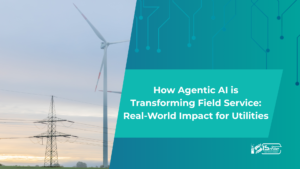
How Agentic AI is Transforming Field Service: Real-World Impact for Utilities
From Digital Strategy to Real-World Field Impact Utilities have invested heavily in digital transformation—but a critical gap still exists. While enterprise systems have evolved, field

Launching AI-Powered Field Service in Weeks: A Practical Guide for Utilities
Field Service is Becoming Real-Time, Intelligent, and AI-Driven Utilities are under increasing pressure to do more with less—faster response times, improved crew safety, and higher

6 Breakthrough Innovations from Databricks Data + AI Summit 2025 Transforming Enterprise Data Intelligence
From Data Platforms to Decision Intelligence The conversation around data is changing. Enterprises are no longer asking how to store or process data—they’re asking how
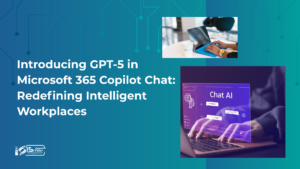
Introducing GPT-5 in Microsoft 365 Copilot Chat: Redefining Intelligent Workplaces
The Next Evolution of Work: GPT-5 in Microsoft 365 Copilot Work today is no longer just about productivity—it’s about decision speed, intelligence, and impact. With
AI Concierge on Databricks: Enabling Intelligent, Scalable Customer Experiences
Reimagining Customer Experience in the Age of AI Customer expectations are evolving faster than ever. Today’s users demand seamless, personalized, and real-time interactions—whether they are
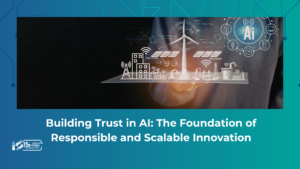
Building Trust in AI: The Foundation of Responsible and Scalable Innovation
Building Trust in AI The Foundation for Responsible and Scalable Innovation Organizations today face a critical challenge: scaling AI without losing trust. AI is no
From Data Chaos to Decision Intelligence: The Foundation of Your AI Journey
From Data Chaos to Decision Intelligence AI Success Starts with Operational Data Maturity Organizations today aren’t struggling to adopt AI—they’re struggling to deliver business outcomes
The AI Frontier Shift: From AI Adoption to AI-Driven Decision Ecosystems
From AI Adoption to Business Reinvention Enterprises today face a growing challenge: AI adoption is increasing, but business outcomes are not keeping pace. Many organizations