ISMILE is not just another consultancy. We are the execution partner that bridges the gap between visionary AI strategy and secure, compliant production at scale in the pharmaceutical sector.
01 AI is stuck in experimentation
Creates Enterprise AI roadmaps, governance models, secure AI architecture, AI CoE support, human-in-the-loop workflows, and production-ready AI execution frameworks.
02 Data is fragmented across brands, channels, vendors, and systems
Builds Data Intelligence Platforms that unify CRM, CMS, DAM, MLR, media, analytics, marketing automation, and sales data into a governed intelligence layer.
03 Reporting exists, but intelligence is missing
Develops executive dashboards, predictive analytics, AI-assisted recommendations, next-best-action intelligence, and closed-loop reporting systems
04 The MarTech stack is fragmented, underused, or poorly architected
Designs AI-ready MarTech ecosystems with CRM, CMS, DAM, MLR, analytics, media, and marketing automation integrations.
05 Pharma marketing execution is fragmented
Connects planning, engagement strategy, content production, MLR readiness, analytics, reporting, and sales feedback loops into a unified workflow.
06 MLR review cycles are slowing execution
Implements pre-MLR readiness checks, content governance, version control, compliance checkpoints, and review-ready asset preparation.
07 AI introduces security and data exposure risk
Designs secure AI environments with role-based access controls, encryption, audit trails, monitoring, data isolation, and governance controls.
08 AI governance is unclear or inconsistent
Establishes AI governance frameworks, approval workflows, risk classification, auditability, prompt governance, and compliance checkpoints.
09 AI costs are difficult to control
Applies AI FinOps including usage monitoring, budget controls, cost optimization, ROI tracking, and cloud spend visibility.
10 Digital assets are spread across too many vendors and hosting environments
Provides secure managed pharma hosting, monitoring, backups, privacy controls, performance optimization, and web operations support.
11 Omnichannel execution is not truly connected
Connects websites, email, CRM, media, analytics, sales tools, and reporting into a unified omnichannel execution framework.
12 SaaS platforms do not fit pharma workflows
Builds custom execution platforms aligned to brand needs, therapy areas, compliance requirements, governance models, and commercial operations.
13 Legal, MSA, and AI addendum requirements are slowing AI adoption
Supports AI implementation planning around MSAs, SOWs, AI addendums, privacy requirements, vendor governance, and risk management.
14 AI Center of Excellence strategy is not reaching execution
Helps AI CoEs operationalize AI through reusable workflows, use-case prioritization, governance implementation, and business value measurement.
Most pharma AI initiatives fail in the transition from lab to production. Let’s ensure yours isn’t one of them.

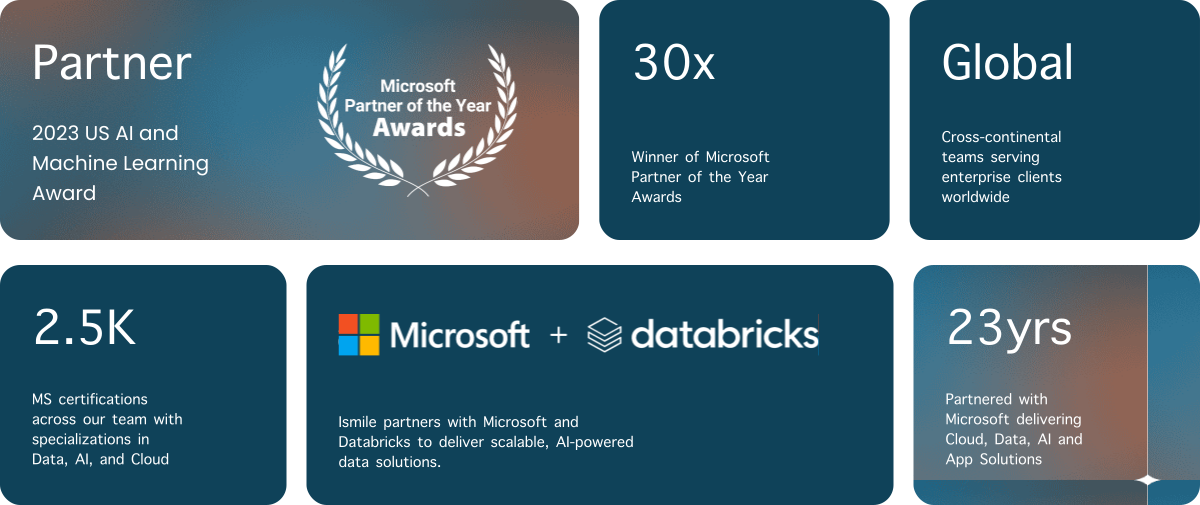
Driving AI value with brilliant minds, alliances and global reach
Many pharma teams are testing AI through disconnected pilots, one-off use cases, isolated analytics initiatives, department-level automation, and experimental proof-of-concepts without a production roadmap. This often results in limited business impact, unclear governance, increased security risk, and no repeatable operating model. ISMILE helps organizations move from experimentation to governed enterprise AI execution.
Pharma organizations often have CRM, marketing, media, web analytics, sales, MLR, and engagement data spread across disconnected systems. This creates inconsistent reporting, limited customer visibility, and blocks AI initiatives because the data foundation is not ready. ISMILE helps build Data Intelligence Platforms that unify data and create a connected intelligence layer for commercial decision-making.
MLR bottlenecks are often caused by incomplete content submissions, missing references, unclear claims, inconsistent review workflows, poor traceability, manual version control, and late-stage compliance issues. ISMILE helps establish MLR-ready workflows, governance processes, and review readiness controls that improve submission quality and reduce delays.
Without proper controls, AI tools can expose sensitive information such as HCP data, patient support data, brand strategies, launch plans, sales performance data, market access information, MLR-sensitive content, and proprietary business information. ISMILE helps design secure enterprise AI workflows with data isolation, encryption, role-based access controls, audit trails, monitoring, and governance controls.
Many organizations lack a consistent AI use-case intake process, risk classification model, approval workflow, audit trail, human review requirements, prompt governance, and ownership structure across business, IT, legal, compliance, and security teams. ISMILE helps establish practical AI governance frameworks that provide control, transparency, accountability, and enterprise-scale adoption.
Enterprise Pharma AI is the strategic use of artificial intelligence across pharmaceutical organizations to improve commercial operations, medical affairs, regulatory processes, compliance, and data-driven decision-making. By combining AI, automation, and governed data platforms, pharmaceutical companies can streamline workflows, accelerate execution, reduce risk, and improve business outcomes while maintaining regulatory compliance.
AI improves pharmaceutical marketing by analyzing customer data, personalizing healthcare professional (HCP) engagement, optimizing omnichannel campaigns, and generating actionable insights. It helps marketing teams identify audience preferences, improve campaign performance, automate content workflows, and make faster, data-driven decisions that increase engagement and return on investment.
AI helps pharmaceutical organizations strengthen regulatory compliance by automating document reviews, monitoring policy adherence, identifying potential compliance risks, and maintaining audit-ready records. AI-powered governance frameworks ensure that content, data, and processes align with industry regulations such as FDA requirements, GxP standards, HIPAA, and GDPR.
A Pharma Data Intelligence Platform is a centralized environment that integrates data from commercial, medical, regulatory, and operational systems. It enables pharmaceutical companies to transform fragmented information into actionable insights, improve reporting accuracy, support AI initiatives, and provide a trusted foundation for enterprise-wide decision-making.
AI supports omnichannel engagement by connecting customer interactions across email, web, CRM, events, social media, and field teams. It helps pharmaceutical companies deliver consistent and personalized experiences, optimize communication strategies, predict customer needs, and improve engagement with healthcare professionals and stakeholders across all channels.
Generative AI in pharmaceutical environments can introduce risks related to data privacy, regulatory compliance, hallucinated outputs, intellectual property exposure, and inconsistent governance. Organizations can reduce these risks through secure AI architectures, human oversight, validation processes, clear governance policies, and responsible AI frameworks designed for regulated industries.
The fastest-return AI use cases in pharmaceuticals typically include commercial analytics, MLR workflow automation, omnichannel campaign optimization, medical content management, predictive forecasting, customer insights, and digital worker automation. These applications deliver measurable efficiency gains, reduce operational costs, and improve decision-making across the organization.
Pharmaceutical companies govern AI models through structured frameworks that define data quality standards, model validation procedures, risk management controls, compliance requirements, and ongoing monitoring processes. Effective AI governance ensures transparency, accountability, security, regulatory alignment, and responsible use of AI across enterprise operations.
An AI Center of Excellence (CoE) is a dedicated team responsible for establishing AI strategy, governance, standards, best practices, and implementation frameworks across an organization. In pharmaceutical companies, an AI CoE helps scale successful initiatives, align business objectives with technology investments, and ensure responsible, compliant AI adoption.
Didn’t find the answer you’re looking for?
Help us improve our knowledge base by submitting a question and suggested answer.
Our team will review your submission before publishing.